


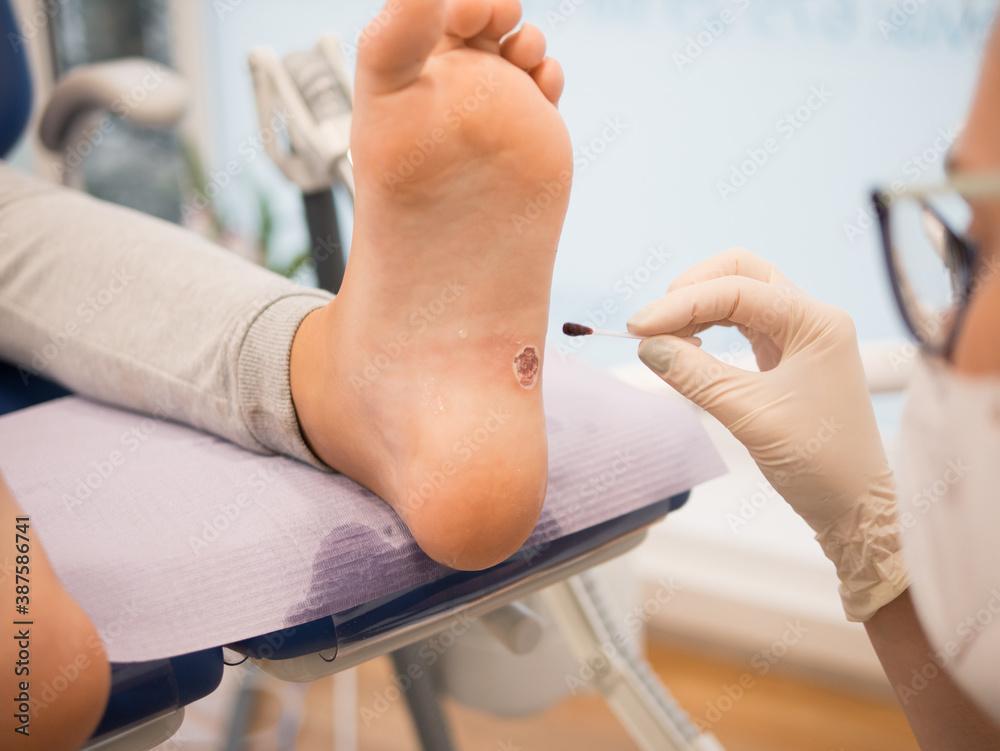
Experiencing discomfort on the bottom of the foot can disrupt daily routines and limit basic mobility. This physical distress may stems from a specific type of skin infection known as a plantar wart. These growths develop on weight-bearing areas, creating constant pressure that resembles the feeling of stepping on a small stone. Seeking professional care provides diagnostic clarity and access to effective management strategies. A plantar wart specialist can properly identify the condition, distinguishing it from other common foot ailments like calluses or corns that present with similar visual traits.
What Are Plantar Warts?
Plantar warts are benign skin growths that form on the soles of the feet. Because they appear on weight-bearing areas such as the heels or the balls of the feet, the body’s natural response is to build thick, hard skin over the affected area. Multiple lesions may sometimes merge into a single large cluster known as a mosaic wart. The most prominent sign is localized pain or experiencing tenderness when walking, running, or standing. The affected area may display a rough, grainy texture. Another distinct characteristic involves the presence of tiny black dots near the center of the growth. These dark specks are small, clotted blood vessels that supply the lesion with blood.
What Causes Them?
The human papillomavirus (HPV) causes these specific foot lesions. With over a hundred different strains of HPV in existence, a select few target the feet to create these specific bumps. The virus infiltrates the body through microscopic cuts, abrasions, or weak spots on the bottom of the foot and establishes a localized infection that develops into the physical growth.
The virus thrives in warm, damp environments, including public swimming pools, communal showers, and gym locker rooms serve as common transmission sites. Walking barefoot in these shared areas increases the risk of exposure. The virus transmits through direct contact, and an individual can contract it by touching an infected surface or sharing personal items like towels, socks, and shoes. People with a history of similar viral growths or weakened immune systems possess a higher susceptibility to the infection.
What Should You Expect?
A plantar wart specialist begins the visit by examining the foot. This aims to confirm the diagnosis and rule out other potential conditions. Following the diagnosis, the podiatrist will recommend a specific therapeutic approach tailored to the severity of the infection. Many specialists utilize advanced topical medications and resolve the lesion without invasive surgery. A provider can apply a specialized combination of medications directly to the growth, followed by precise padding techniques. Over the course of a few appointments, this medical application gradually softens the lesion.
Consult a Plantar Wart Specialist
A specialist provides targeted therapies that over-the-counter remedies may fail to deliver. The thick callus layer covering the infection can make self-care difficult and be ineffective. A dedicated podiatrist assesses the exact depth and nature of the growth, tailoring a precise clinical plan for recovery. Scheduling a professional evaluation is the most direct path to regaining full, pain-free mobility.
