


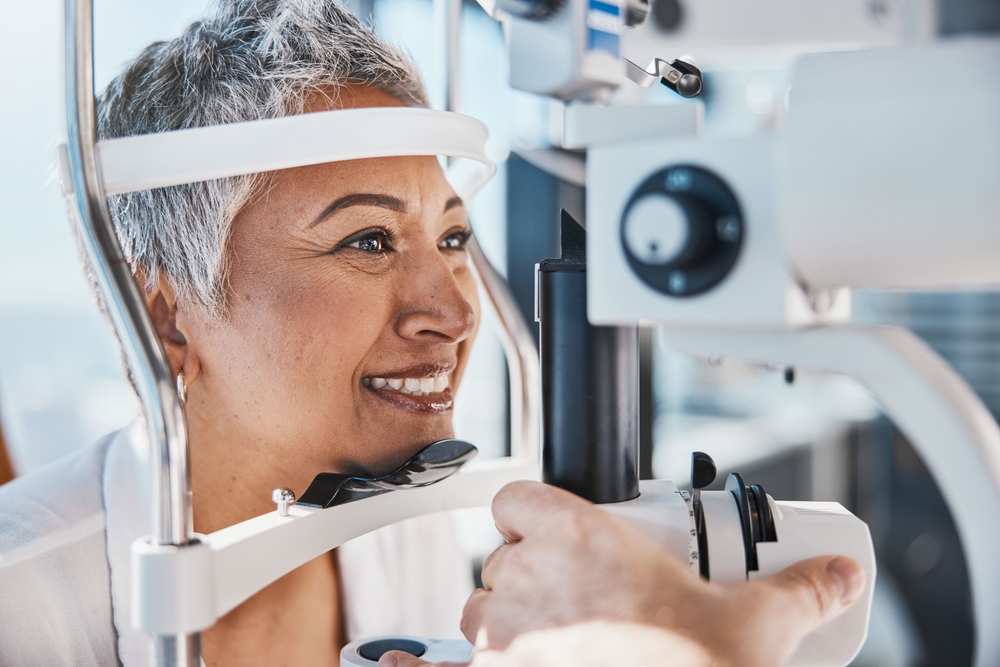
An eye exam is a structured appointment that evaluates vision and documents the condition of various eye structures. The visit may include vision testing, measurements, equipment-assisted evaluation, and a discussion of findings. Each step provides key information for your eye care provider to record in your medical chart; this supports clinical decision-making and future care planning. Here are additional details about eye exams and how they work:
Reviewing Your Health History
Your visit may begin with intake forms or a chart update. This step involves sharing information about current prescriptions and over-the-counter products, past procedures, contact lens use, and family health history. Clinic staff may also ask if you’ve noticed changes in your vision or new issues with daily visual tasks.
Helpful items to bring to an eye exam appointment include:
- Current eyeglasses or contact lenses
- A copy of your current vision prescription
- A list of medications and supplements
- Prior eye records, if your provider requested them
Your provider uses this information to create a basic profile for the exam. The history review also helps the team determine which standard checks are appropriate for the visit type; options range from routine eye exams to contact lens evaluations. This makes sure the appointment is tailored to your current visual needs and any recent changes in your eye health.
Testing Your Visual Acuity
Visual acuity testing measures how clearly you read letters, numbers, or symbols at a set distance. During this exam, the technician or provider asks you to cover one eye at a time and read from a chart. The team then records the smallest line you read according to the testing method used in that office.
If you wear glasses or contact lenses, the team may assess your vision both with and without correction. These measurements provide a practical baseline for the remainder of the appointment. If your visit includes a prescription check, you may be asked to view through different lens options while indicating which appears clearer. This process compares lens strengths in a controlled setting, and it supports accurate prescription documentation.
Measuring Eye Pressure
Eye pressure measurement, or tonometry, records the pressure inside the eye. Practices may use different methods for this step. Some utilize a device that delivers a brief puff of air to the eye’s surface; others use numbing drops and a small instrument that gently touches the front of the eye. The result is recorded in your chart alongside other exam findings.
Examining Eye Structures
Using specialized equipment, the provider evaluates both the external and internal structures of the eyes. A slit lamp provides magnification and a focused light to examine the eyelids, cornea, iris, and lens. You will rest your chin and forehead on supports to help maintain a stable viewing position.
Your provider may also assess the back of the eye. In some visits, dilating drops are used to enlarge the pupils; this allows for a broader view of internal structures such as the retina and optic nerve. Because the drops require time to take effect, this portion of the exam may extend the overall appointment duration.
Discussing Exam Findings
After completing the exam steps, the provider reviews the recorded information with you. They may discuss visual acuity results, prescription updates, pressure measurements, and observations from the structural exam. If you need glasses or contact lens documentation, the office is able to assist you with your prescription. This discussion also covers practical next steps. Your provider may recommend a follow-up timeline, additional testing, or routine monitoring based on the visit type and the information gathered.
Schedule an Eye Exam
An eye exam involves evaluating your vision, eye pressure, and various key structures. Each step adds key information to your eye care record, and it helps organize future visits, whether you require new glasses or an updated prescription. Contact your local eye care provider today to schedule an eye exam.
