


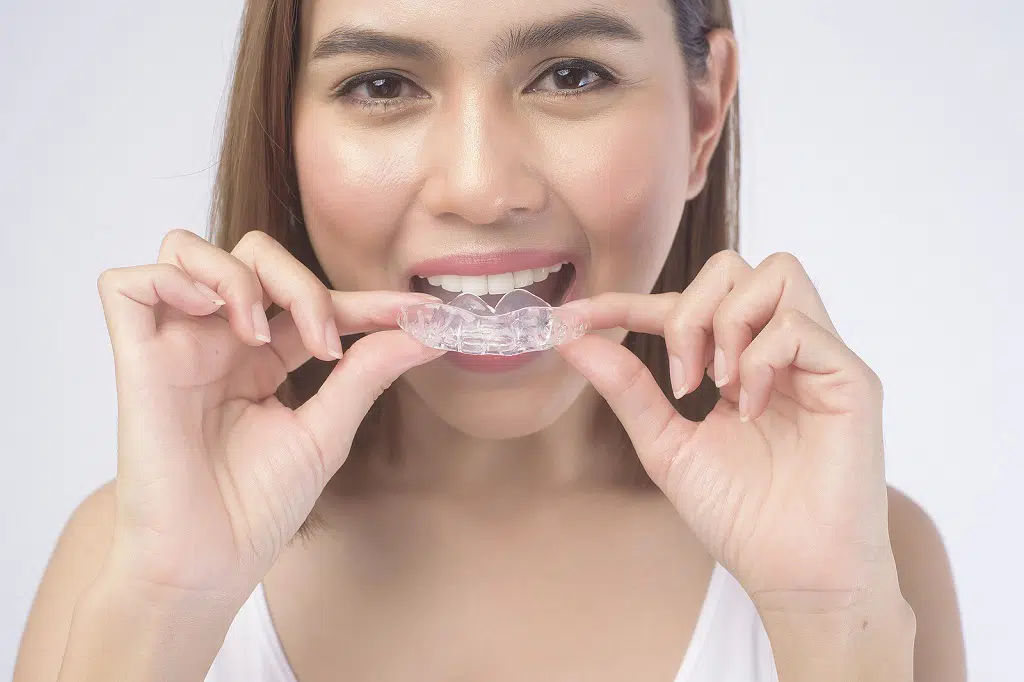
Invisalign is a modern orthodontic system, and it uses a series of clear plastic aligners to straighten teeth gradually. Traditional metal braces rely on brackets and wires, but Invisalign offers a discreet alternative that is removable. Because the aligners are removable, you can eat and brush as normal while your therapy progresses. Each aligner applies gentle pressure to specific teeth, which moves them little by little over time toward the desired alignment. Here is more information about Invisalign and how the treatment corrects alignment issues:
Introducing Invisalign
Invisalign treats a wide range of dental issues, and it works for both teens and adults who want a discreet option. The aligners can fix crowded teeth. They also address gaps between teeth that affect your smile. Because every mouth is different, a dental professional will assess whether your case suits this treatment.
Invisalign corrects several common alignment problems:
- Overbite: the upper teeth overlap the lower teeth
- Underbite: the lower teeth sit in front of the upper teeth
- Crossbite: some upper teeth fall behind the lower teeth
- Crowding: teeth overlap due to limited space
- Gaps: extra space appears between teeth
The provider uses 3D imaging to map out your treatment, and this technology shows how your teeth will move at each stage. Your aligners arrive in a planned sequence, and you switch to a new set about every two weeks as your teeth respond.
Starting Treatment
Your treatment begins with a consultation, and the dentist examines your teeth to confirm you are a good candidate. The dentist takes digital scans of your mouth that they use to create a detailed model. These scans help the provider create a custom plan. You can preview the expected results before treatment starts.
Once the plan is approved, your aligners are manufactured to fit your teeth exactly. The dentist will explain how to wear them, and you will receive guidance on cleaning and care. You should wear each aligner for 20 to 22 hours a day to keep your treatment on track.
During Treatment
During treatment, your teeth gradually move toward their target positions. You remove the aligners to eat and clean your teeth, but you replace them promptly after brushing your teeth and rinsing the tray. Because the aligners are smooth plastic, they may cause less irritation than metal braces do.
You will visit your dentist periodically, and these checkups confirm that your progress is as expected. The dentist may adjust your treatment if your teeth move more slowly than expected. Most treatments last between 12 and 18 months.
Here are other guidelines to follow during treatment:
- Remove the aligners only when eating, drinking beverages other than water, or cleaning your teeth.
- Avoid eating or drinking hot liquids while wearing the aligners, as the heat can warp the plastic.
- Store the aligners in their designated case when not in use to prevent damage or loss.
Completing Treatment
When your teeth reach their final positions, your active treatment ends. Teeth can drift back toward their old positions. Wearing a retainer maintains the new positioning. Your dentist will recommend how long to wear your retainer each day, and many patients wear theirs only overnight. Regular dental visits help confirm your smile stays healthy and aligned over the years.
Learn More About Invisalign
Invisalign is a clear, removable way to correct alignment issues, and it treats problems like overbites, underbites, and crowding. Because the system is discreet and convenient, many patients find it fits their lifestyle well. Invisalign may be a good fit for you if you are able to commit to wearing the aligners as directed. To learn more about Invisalign treatment, consult a dental professional near you.
