


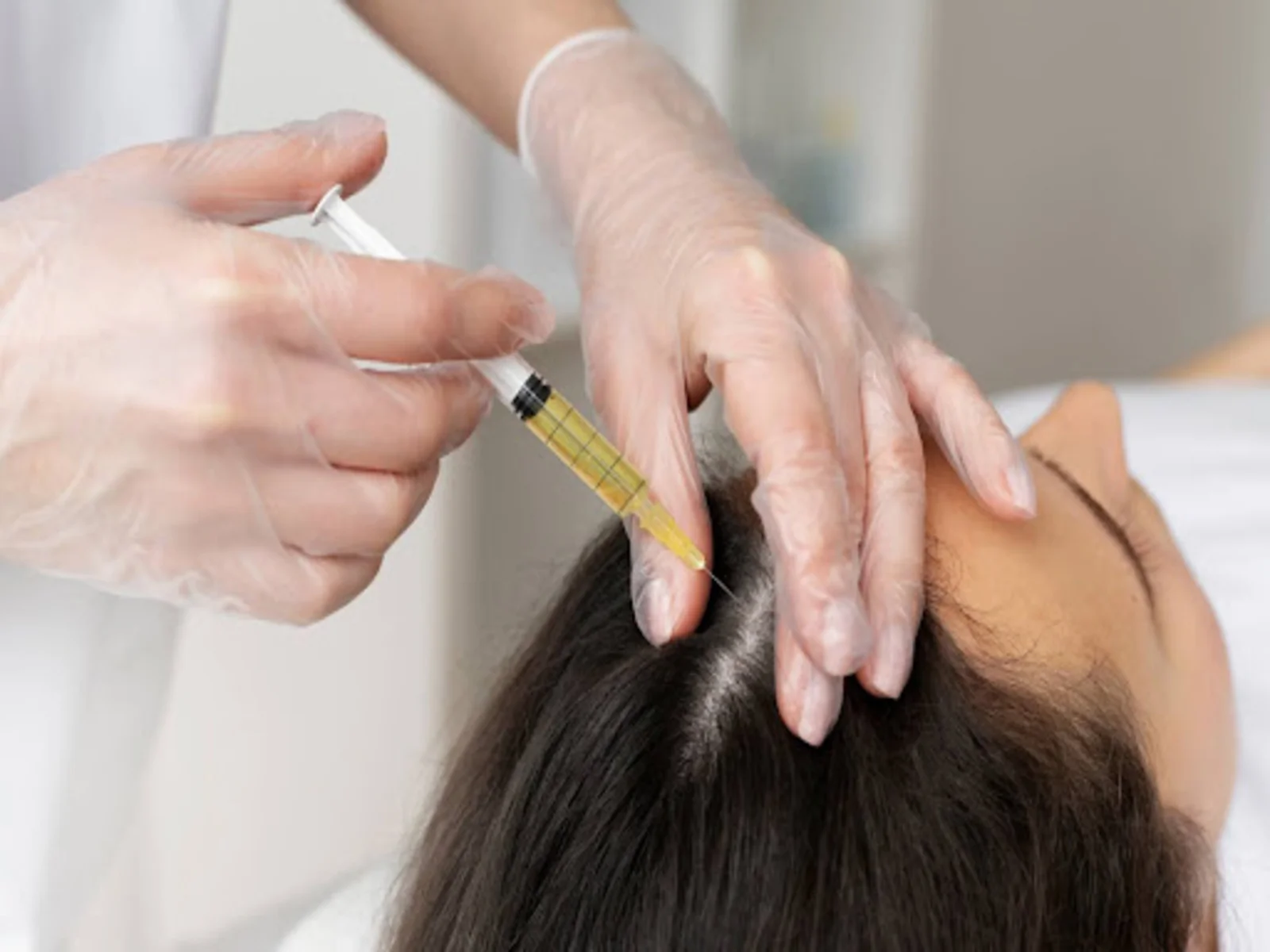
Platelet-rich plasma (PRP) therapy is a minimally invasive hair loss treatment. It uses concentrated growth factors from a patient’s own blood, and these factors work to stimulate hair follicle activity. While results vary between individuals, PRP therapy can increase hair density and slow hair loss with minimal side effects. Here is more information on PRP for hair loss:
What Is Hair Loss Treatment?
Hair loss treatment refers to any clinical intervention designed to slow, stop, or reverse hair thinning and shedding. Treatments vary in approach, and while some target hormonal causes, others stimulate the scalp directly. Since hair loss can stem from multiple underlying factors, no single treatment is universally effective. PRP for hair loss addresses hair loss at the follicular level. Unlike surgical options or synthetic compounds, PRP therapy works with the body’s own biological processes.
What Is PRP for Hair Loss?
Platelet-rich plasma (PRP) is a concentration of platelets derived from a patient’s own blood, and it contains growth factors that signal the body to repair and regenerate tissue. These growth factors are proteins. When applied to the scalp, PRP delivers these growth factors directly to hair follicles, encouraging cellular activity in areas where hair growth has slowed or stopped.
How Does It Work?
PRP therapy for hair loss follows a standardized process, and a specialist will explain the steps. A small amount of blood is drawn from the patient and placed in a centrifuge, which separates the platelet-rich plasma from other blood components. The concentrated PRP is then injected into targeted areas of the scalp.
Once the growth factors in PRP are injected, they interact with hair follicle cells, and this interaction stimulates the follicles to shift from the resting (telogen) phase into the active growth (anagen) phase. The follicles become reactivated. Patients typically undergo an initial series of three sessions spaced four to six weeks apart, and they may follow this with maintenance treatments to sustain results.
What Are the Benefits?
PRP therapy offers several advantages for hair loss patients:
- Increased hair density: Patients may experience improved hair count and thickness following treatment.
- Slowed hair loss progression: PRP helps stabilize active hair shedding by reinforcing follicle health.
- Minimal side effects: Since PRP uses the patient’s own blood, the risk of allergic reaction or rejection is low.
- No downtime: Patients may return to normal activity on the same day as treatment.
PRP therapy is compatible with other hair loss treatments, and a combined approach may be recommended when clinically appropriate. It is particularly suited to patients in the early-to-mid stages of hair loss. Because follicles remain viable but underactive at this stage, PRP can effectively stimulate renewed growth activity.
Results vary by individual. Several factors influence the outcome; age, the extent of hair loss, and overall scalp health all play a role in determining how a patient responds to treatment. Some patients observe noticeable changes within a few months of beginning treatment, although some may experience results later.
Address Your Hair Loss Today
PRP therapy offers a structured, evidence-based approach for patients seeking to slow hair loss and improve hair density. It uses the body’s own growth factors, and the treatment targets hair follicles at a biological level, making it a valuable option for those in the early-to-mid stages of hair loss. If you experience hair loss, consult with a hair restoration specialist to determine whether PRP is appropriate for you.
