


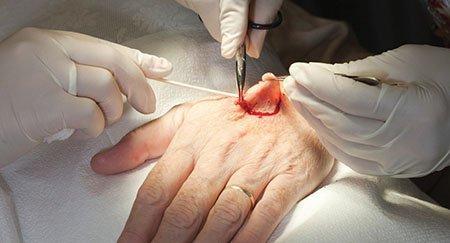
Mohs skin cancer surgery treats this condition by removing tissue in thin layers, and a surgeon examines each layer under a microscope during the same appointment. The procedure targets basal cell and squamous cell carcinomas, and it works well in areas where preserving healthy skin matters. Recent refinements have improved how precisely surgeons map and remove affected tissue. Here is more information on advances in this surgical approach:
Micrographic Surgery
Micrographic surgery removes cancer one layer of skin at a time. The surgeon maps each layer, and the lab processes it while you wait. This staged approach lets the surgeon pinpoint cancer cells with high accuracy.
New methods for Mohs skin cancer surgery speed up tissue analysis. Since samples are processed faster, fewer delays typically occur between removal stages. Surgeons review the slides directly, and they decide whether another layer is needed.
This approach offers several key benefits:
- High precision: Surgeons can pinpoint the exact location of cancer cells.
- Immediate results: Faster tissue analysis typically means fewer delays.
- Reduced errors: Clear mapping helps make sure of accurate reconstruction.
Local Anesthetic
Most Mohs procedures use a local anesthetic. The surgeon numbs only the treatment site, so you remain awake throughout. This focused approach aims to limit the risks tied to general anesthesia.
Updated injection techniques reduce discomfort during numbing. Surgeons apply slower delivery methods, and many patients may have less stinging. Since the anesthetic stays local, recovery time typically shortens.
Preserved Tissue
A main goal of Mohs surgery is tissue conservation. The surgeon removes cancer while sparing as much healthy skin as possible. This precision matters on the face, ears, and hands.
Recent advances improve margin assessment. When the surgeon reads margins more accurately, less healthy tissue is taken. The technique relies on careful mapping, and it supports cleaner reconstruction afterward.
Surgeons now use thinner sectioning during processing. These thin layers reveal cancer borders with greater clarity. Smaller wounds result, which simplifies closure for many patients. This approach enhances cosmetic outcomes and may also reduce the risk of recurrence, offering patients a higher level of care and comfort.
High Effectiveness
Mohs surgery records high cure rates for specific skin cancers. Studies report strong outcomes for primary basal cell carcinoma. The layered method examines nearly all surgical margins.
Several factors support these results:
- Real-time microscopic review of tissue
- Detailed mapping of each removed layer
- Same-day processing during the appointment
Newer protocols refine how surgeons stage difficult tumors. When margins appear unclear, the surgeon repeats the layered process. This approach lowers the chance of leaving cancer behind, and it guides further treatment decisions. The technique uses a local anesthetic, preserves healthy tissue, and records high cure rates for select cancers.
Schedule Mohs Skin Cancer Surgery
Mohs surgery combines precise removal with careful margin review. Recent advances in mapping, staining, and sectioning have refined each step. If a dermatologist has diagnosed your skin cancer, talk with a Mohs surgeon about your options. Ask about candidacy, preparation, and what to expect during recovery. Schedule a consultation this week to discuss whether Mohs surgery fits your diagnosis.
